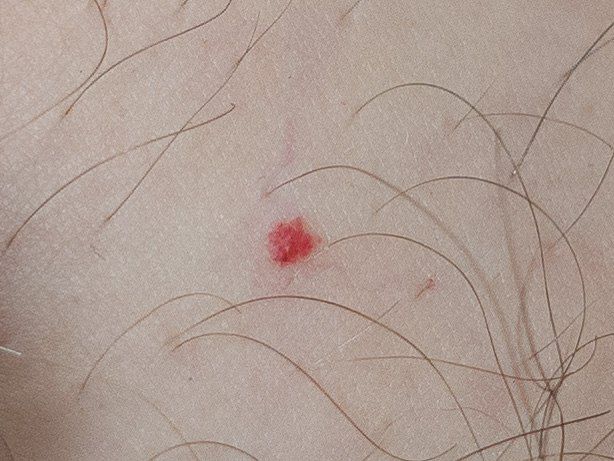
The exact cause of hemangiomas is unknown, but they are linked to local overgrowth of blood vessels influenced by genetics, pregnancy factors, and sometimes internal diseases. In adults, vascular wall changes, liver disease, hormonal issues, and UV exposure may play a role.
Hemangiomas almost never turn into cancer, and their malignant risk is similar to normal skin. The main risks are bleeding, ulceration, infection, and cosmetic or functional problems if the lesion is large or in a sensitive area.
Many small, stable hemangiomas do not need treatment and can simply be monitored, including with our AI skin analysis. If treatment is needed, options include laser therapy, cryotherapy, sclerotherapy, surgery, and for some congenital forms, medications like beta-blockers or steroids.
You cannot fully prevent hemangiomas, especially congenital ones, but healthy pregnancy care lowers some risks. For existing hemangiomas, prevention focuses on protecting the skin from trauma, managing other diseases, and checking lesions regularly, including with our AI skin analysis.
Most hemangiomas can be shown to a dermatologist in a planned visit, especially if they are new, growing, or cosmetically bothersome. Urgent care is needed if there is heavy bleeding, rapid change, or a lesion near the eye, mouth, or airway in a child.
Hemangiomas are usually not an emergency and can be evaluated in a routine dermatology visit. Seek urgent care only if there is strong bleeding, rapid growth, severe pain, or if a lesion in a child affects breathing, feeding, or vision.