

Why That Red Spot Isn't Going Away
You've noticed it for weeks now. Maybe months. A red spot on your skin that simply won't fade, no matter how much you ignore it or hope it disappears on its own.
You're not alone—persistent red spots are one of the most common skin concerns that send people searching for answers online. The truth is, that stubborn red mark could be telling you something important about your health. Some red spots are completely harmless, developing naturally as we age.
Others demand immediate medical attention. The challenge is knowing which is which. Most people wait an average of 6-8 weeks before seeking help for a persistent skin change, and sometimes that wait can be dangerous.
Worried? Get a free AI skin check in under 30 seconds and stop the guessing game. Understanding what's happening beneath your skin's surface starts with recognizing the different types of red spots and what makes them persist.
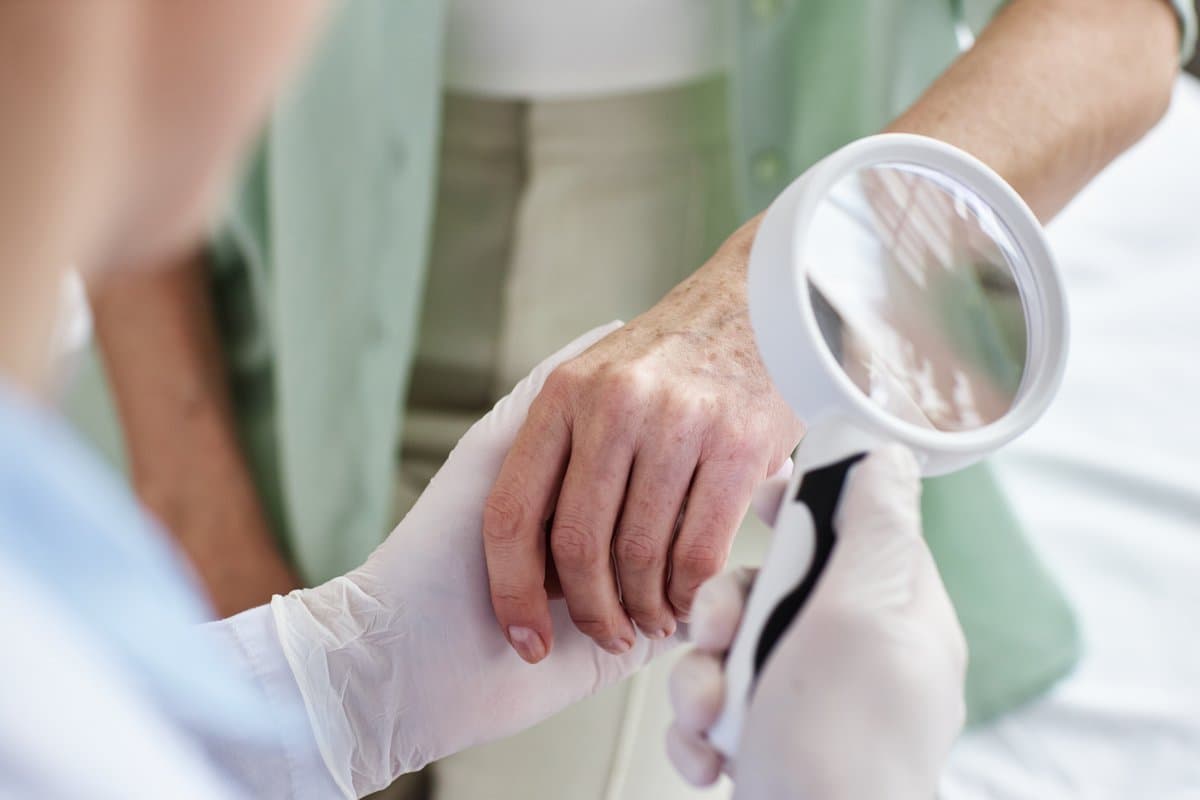
The Most Common Culprits Behind Stubborn Red Spots
Cherry angiomas are perhaps the most frequent offenders—small, bright red bumps caused by clusters of blood vessels. They're typically harmless and become more common after age 30, affecting nearly everyone by their 70s. Then there's seborrheic keratosis, which can appear red or brown and often looks like it's stuck onto the skin.
Dermatofibromas are firm, red-brown nodules that form after minor injuries, sometimes persisting for years. Psoriasis patches can present as red, scaly areas that refuse to clear without treatment. Eczema flare-ups might linger in the same spots, especially if you're repeatedly exposed to triggers.
Petechiae—tiny red or purple dots—can signal bleeding under the skin and shouldn't be ignored if they appear suddenly or spread. Then there are the more serious possibilities: basal cell carcinoma often appears as a pearly or red bump that may bleed and scab but never fully heals. Squamous cell carcinoma can look like a persistent red, scaly patch.
If you have moles you're unsure about, learn more about when a mole is dangerous. Upload a photo now and know within minutes whether your red spot matches patterns seen in thousands of diagnosed cases.

Warning Signs You Absolutely Shouldn't Ignore
Not all red spots are created equal, and certain features should send you straight to a dermatologist—or at least prompt you to document and analyze what you're seeing. A spot that bleeds without injury is a red flag.!! Changes in size, especially rapid growth over weeks or months, warrant immediate attention.
Irregular borders that look jagged or poorly defined are more concerning than perfectly round spots. Color variation within the same spot—mixing red with brown, black, or blue—is another warning sign. Ulceration or crusting that doesn't heal is particularly worrying.!!
If the spot feels different from surrounding skin—harder, raised, or painful—that's worth investigating. Any red spot accompanied by systemic symptoms like fever, fatigue, or unexplained weight loss could indicate something more serious. One photo.
One minute. Peace of mind. The reality is that early detection of skin cancer has a cure rate exceeding 95%, but that drops dramatically when diagnosis is delayed.!! Your instinct that something isn't right deserves to be taken seriously.
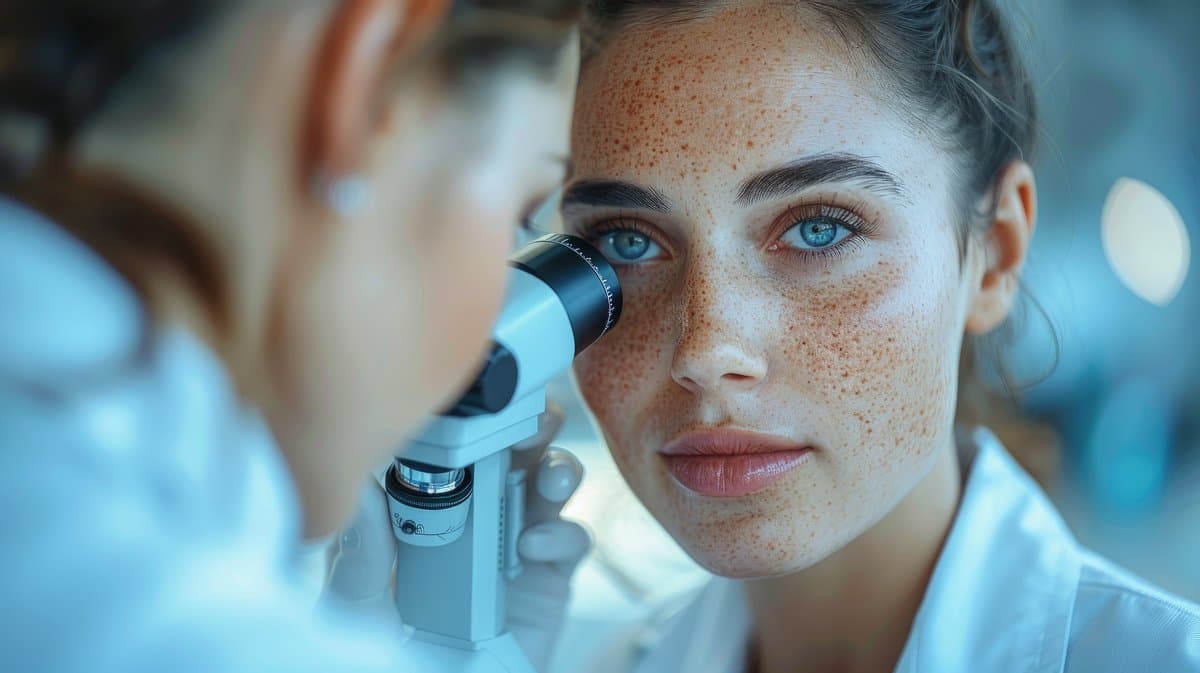
What Your Doctor Looks For (And Why Timing Matters)
When dermatologists evaluate a persistent red spot, they're conducting a systematic assessment that goes far beyond a casual glance. They examine the spot's borders, looking for asymmetry or irregularity. They check how it feels—is it flat, raised, firm, or soft?
They ask about its history: When did you first notice it? Has it changed? Does it itch, bleed, or hurt?
They might use a dermatoscope, a specialized magnifying device that reveals patterns invisible to the naked eye. In many cases, a biopsy is the only definitive way to rule out cancer, involving the removal of a small tissue sample for laboratory analysis. But here's the critical part: the earlier a concerning spot is evaluated, the simpler and more successful treatment tends to be.
A basal cell carcinoma caught early might require only a simple office procedure. The same cancer left untreated for years could require extensive surgery, skin grafts, or radiation. Stop guessing.
Start scanning. Most people wait too long simply because they don't know if their concern is valid or they're afraid of wasting a doctor's time. Modern AI analysis can help bridge that gap, giving you confidence about whether that red spot needs professional eyes or just continued monitoring.

Why 'Wait and See' Can Be a Dangerous Strategy
There's a natural human tendency to hope skin problems will resolve themselves. And truthfully, many do—a bug bite fades, a scratch heals, a pimple disappears. But when a red spot persists beyond 3-4 weeks without any improvement, the 'wait and see' approach shifts from reasonable to risky.
Skin cancers don't hurt in early stages, which is exactly why they're so insidious. That painless red spot might be silently growing deeper into tissue layers. Inflammatory conditions like psoriasis or eczema won't improve without treatment and may actually worsen, leading to permanent skin changes or secondary infections.
Vascular lesions can grow larger over time, becoming more difficult to treat cosmetically. The psychological toll of worry shouldn't be underestimated either—many people report that the anxiety of not knowing is worse than receiving a diagnosis and starting treatment. Your phone camera could save your skin—literally. Modern dermatology has evolved to meet you where you are, with technology that can provide meaningful guidance without requiring you to wait weeks for an appointment or second-guess whether your concern is legitimate.

Understanding the Difference: Urgent vs. Monitor-Worthy
Learning to categorize your red spot can help you respond appropriately without either panicking unnecessarily or dangerously downplaying something serious. Urgent red spots typically share certain features: sudden appearance and rapid growth, bleeding or ulceration without trauma, significant pain or tenderness, accompanying fever or other systemic symptoms, or appearance in multiples across different body areas. Monitor-worthy spots are generally stable in size, have been present for years without change, match characteristics of known benign conditions like cherry angiomas, or appear identical to other spots you've had confirmed as harmless.
The gray area—and this is where most people find themselves—includes spots that have been present for several weeks to months, show subtle changes, or don't fit neatly into 'definitely harmless' or 'obviously concerning' categories. This is precisely where AI-powered skin analysis excels, comparing your specific spot against databases of diagnosed conditions and providing risk assessment based on visual features. Most people wait too long.
Don't be most people. Getting an objective analysis doesn't mean you're overreacting—it means you're being appropriately proactive about your health.

What Happens Next: From Diagnosis to Treatment
Once you've taken the step to have your persistent red spot evaluated—whether through AI screening or a dermatologist visit—you'll want to know what comes next. For benign conditions like cherry angiomas, treatment is optional and cosmetic, ranging from laser therapy to excision. Seborrheic keratoses can be removed if they're bothersome or repeatedly irritated.
Inflammatory conditions like psoriasis or eczema typically respond to topical treatments, though some cases require systemic medications. If skin cancer is suspected, the diagnostic process usually involves a biopsy, with results typically available within 1-2 weeks. Treatment for non-melanoma skin cancers is highly successful and often straightforward—options include surgical excision, Mohs surgery for precise removal, cryotherapy for superficial cancers, topical chemotherapy creams, or photodynamic therapy.
The vast majority of persistent red spots fall into categories that are either easily treatable or require no treatment at all. The key is knowing which category applies to your specific situation, and that requires evaluation rather than speculation.

How AI Skin Scanning Changes the Game
Traditional dermatology has always faced a bottleneck: too many skin concerns, not enough dermatologists, and appointment wait times that can stretch for months. This is where AI-powered skin analysis represents a genuine breakthrough in accessible healthcare. By photographing your persistent red spot with your smartphone, advanced algorithms can analyze visual patterns—color distribution, border characteristics, texture, and other features—comparing them against thousands of confirmed diagnoses.
Within minutes, you receive a risk assessment that helps you understand whether your red spot matches patterns associated with benign conditions or warrants professional evaluation. This isn't about replacing dermatologists; it's about triaging concerns intelligently so that people who truly need specialist care can access it faster, while those with likely benign conditions can monitor with confidence rather than worry. The technology has been trained on diverse skin tones and presentations, addressing historical gaps in dermatology resources.
For that red spot that won't go away, AI scanning offers something invaluable: immediate, objective information that empowers you to make informed decisions about your health. Upload a photo now and transform uncertainty into clarity. Your skin is trying to tell you something—make sure you're listening with the best tools available.